From memory to nervous system
The first problem with running multiple agents is that they forget. The second is that they can't coordinate. A state layer that solves storage first and then adds signaling becomes a nervous system, not just memory.
Essays, technical articles, and thoughts on building sovereign systems.

The first problem with running multiple agents is that they forget. The second is that they can't coordinate. A state layer that solves storage first and then adds signaling becomes a nervous system, not just memory.

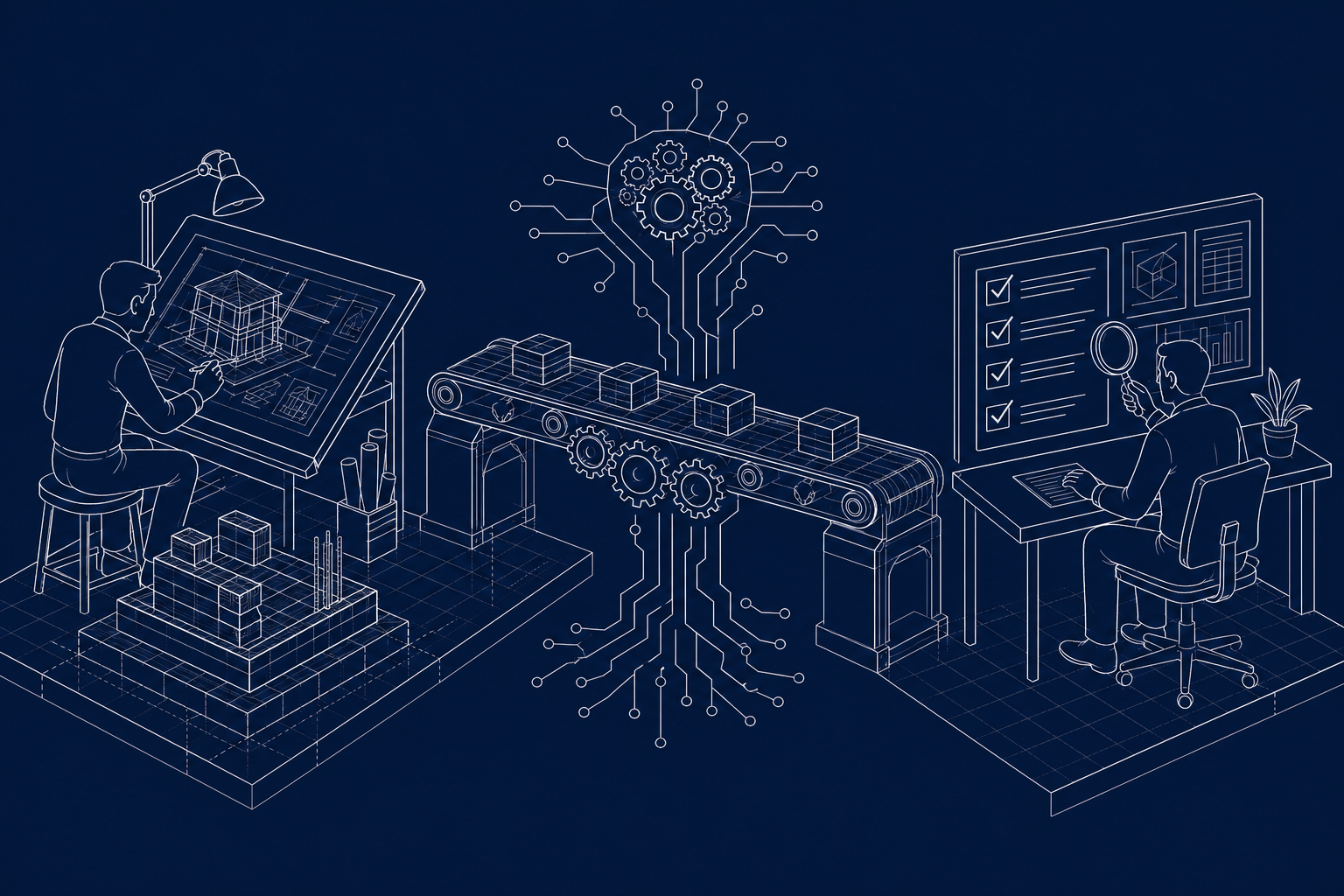
When capable AI absorbs most artifact production in the execution middle, human leverage concentrates at foundation and review. Coherence stops living in hallway handoffs and starts living in explicit standards, cross-readable artifacts, and judgment you can defend at volume.

When many agents write to one memory, you need proof on every row: who signed, what they were allowed to do, and no shared bearer secrets. Neotoma integrates AAuth so each agent signs with its own key and writes through grant-scoped admission.

On the PM role, AI, and the strange decision to define your job around the skill that just got commoditized.

Fourteen years ago I wrote a postmortem for Plancast. Reading it again now, the failure modes weren't really about product mechanics; they were about missing personal AI agents, a proper substrate for them to write to, and a sovereign mesh between them. All three exist now, and the original mission becomes tractable in a way the feed era never could.

OpenClaw stores memory in markdown files. Neotoma v0.4.3 plugs in natively as a structured state layer underneath, giving OpenClaw agents provenance, entity resolution, and versioned history without replacing the agent.

Three independent AI agent platforms worth billions converged on plain text files for memory. The convergence validates the problem. The failure modes they share define what comes next.

Most teams bolt agent memory onto whatever database they already have. It works until two agents write to the same store. Then one bad write propagates at machine speed, triggering downstream actions before any human can intervene. The industry is heading toward a trust crisis that retrieval optimization won't fix.

Sarah Wooders argues memory is the harness. She's right about context management. She's wrong that context is the whole problem.

BEAM tests retrieval at 10 million tokens. State integrity degrades at 500K. The two failure modes activate at different scales, and nobody benchmarks the earlier one.

The metrics that drive adoption in AI memory are almost all retrieval metrics. Good retrieval is necessary. No widely used benchmark tests what happens to stored data after agents write to it.

Eighteen human product evaluators ran the same evaluation prompt through their AI tools. The writeups were sharper than any call. That feedback reshaped the product’s positioning : and then its acquisition flow. The homepage now asks agents to evaluate, not humans to sign up.