যুক্তি মার্টি ক্যাগান ইতিমধ্যে জিতেছে, তারপর পরিত্যক্ত
মার্কডাউন দেখুনPM ভূমিকা, AI, এবং আপনার কাজের দক্ষতার চারপাশে সংজ্ঞায়িত করার অদ্ভুত সিদ্ধান্ত যা সবেমাত্র পণ্যীকরণ করা হয়েছে।
মূল গ্রহণ
- ক্যাগানের 2023 সালে PM কে গভীর ক্রস-ফাংশনাল ইন্টিগ্রেটর হিসাবে ফ্রেমিং করা ছিল একটি AI যুগে ভূমিকার মূল্যের পক্ষে যুক্তির সবচেয়ে শক্তিশালী সংস্করণ।
- তার 2025-2026 পিভট "প্রোটোটাইপার/প্রোডাক্ট ক্রিয়েটর হিসাবে পিএম" এ কাজকে সংজ্ঞায়িত করে যে দক্ষতা AI শুধুমাত্র কমোডিটাইজ করা হয়েছে, সেই সাথে যে দক্ষতাগুলি কেবল দুষ্প্রাপ্য হয়ে উঠেছে তা পরিত্যাগ করে৷
- যখন ডেলিভারি সস্তা হয়, তখন ব্যবসার মাত্রা জুড়ে ইন্টিগ্রেশন ব্যর্থতাগুলি প্রভাবশালী খরচ হয়ে ওঠে এবং সেই ব্যর্থতাগুলি কোনও একক প্রোটোটাইপে নয়, শৃঙ্খলার মধ্যে সম্পর্কের মধ্যে থাকে৷
- ক্যাগান যে প্যাথলজির প্রতিক্রিয়া জানাচ্ছিল, PMরা সমন্বয়ের কাজে আটকা পড়েছেন, ঠিক তাই AI প্রোটোটাইপিং সরঞ্জামগুলি নিরাময় করে, পিভটটিকে এমন একটি সমস্যার প্রতিক্রিয়া হিসাবে তৈরি করে যা ইতিমধ্যে নিজেই সমাধান করছিল।
- প্রতিটি শৃঙ্খলা একই কাঠামোগত প্রশ্নের মুখোমুখি হয়: আপনার পরিচয় কি AI সহজ করে দেওয়া জিনিসে স্থানান্তরিত হয়, নাকি AI করতে পারে না?
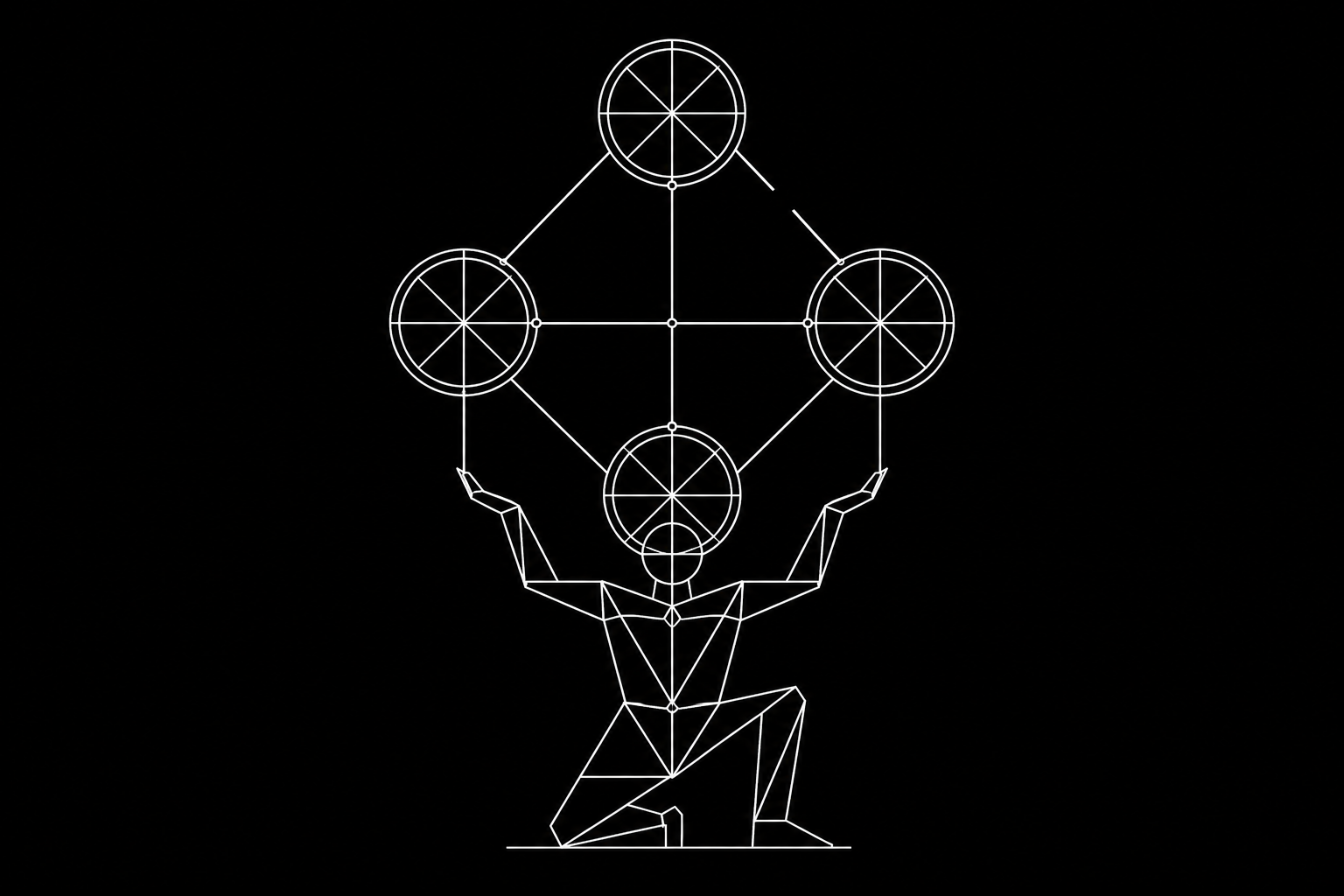
title: "When building got easy, the PM job got harder to explain" excerpt: "On the PM role, AI, and the strange decision to define your job around the skill that just got commoditized." published: true publishedDate: "2026-04-28" category: "AI" tags: ["ai", "product management", "teams", "organization"] heroImage: "the-argument-cagan-already-won-hero.png" heroImageStyle: "keep-proportions" read_time: 13
Marty Cagan has been the most influential voice in product management for two decades. His books, INSPIRED, EMPOWERED, TRANSFORMED, defined the vocabulary the industry uses to talk about itself. When Cagan writes, the product world reorganizes around what he says.
Which is why it matters that his recent work contains a tension sharp enough to be worth naming.
In December 2023, Cagan published "The Product Manager Contribution", where he defined four critical knowledge domains the PM must bring to the team: deep knowledge of customers, fluency with data and analytics, a thorough understanding of the business (go-to-market, stakeholders, economics, compliance), and command of the competitive landscape and industry trends. His conclusion was unambiguous:
These are the four critical contributions that you absolutely need to bring to the team. This knowledge won't come from the product designer, and it won't come from the engineers, but the designer and engineers need this knowledge represented on the team if they are to make intelligent and informed decisions.
Marty Cagan, "The Product Manager Contribution", December 2023
In early 2025, he went further. In "AI Product Management 2 Years In", he reaffirmed a co-authored argument that "contrary to popular opinion, the PM role becomes more essential but also more difficult with generative AI-powered products, not less," adding that "the past year has shown this article to be even more important than I had realized at the time."
He was right. That was the strongest, most defensible version of the argument. And then, over the next year, he buried that stronger argument under a builder/prototyping frame.
The pivot
By May 2025, in "The Era of the Product Creator", Cagan announced that the PM role was being abstracted. Designers, engineers, founders, stakeholders, anyone with "product sense" and the ability to operate the new AI-powered prototyping tools could serve as a "product creator." Strong PMs would thrive, he said, but the role was no longer uniquely theirs. The PM was one possible instantiation of a function that was now open to others.
What makes this pivot especially jarring is that Cagan published "Product, Design and AI" in the same month, co-authored with Bob Baxley. That article argued the opposite: "in the era of Generative AI, these two roles [PM and designer] become even more essential." It described the PM's contribution in terms that could have come from the 2023 articles — deep customer, data, market, and business knowledge as the foundation of product sense, with stakeholder relationships across a dozen business functions as essential to ensuring viability. The two articles sit on the same site, published weeks apart, and are difficult to reconcile. One says the PM's integrative depth is more essential than ever. The other says anyone with product sense can fill the role.
The shift accelerated through the rest of 2025 and into 2026. "The Purpose of Prototypes" (September 2025) further emphasized discovery as prototyping work. "Prototypes vs Products" (November 2025) warned PMs that they were embarrassing themselves by confusing prototypes with production software. "Build to Learn vs Build to Earn" (April 2026) compressed the PM's contribution to building and testing prototypes powered by product sense. And the "Build to Learn FAQ" (April 2026) systematically attacked many inherited PM self-conceptions — decider, protector of the team, manager, explainer of "the why" — and left "builder" as the most vivid surviving image.
What remained, at least rhetorically, was: make prototypes, test them against the four risks, and let product sense do the rest. That is not wrong. But it makes the prototype far more visible than the knowledge system that gives it meaning.
What got lost
Here is Cagan in October 2023, describing the PM on an empowered product team:
Deep knowledge of the customer, the data, the industry and especially your business (sales, marketing, finance, support, legal, etc.) is absolutely non-negotiable and essential.
Marty Cagan, "Product vs. Feature Teams", October 2023
And here is Cagan in January 2022, explaining how the PM solves for viability:
It's essential that the product manager has direct access to the experts across your business, in marketing, sales, services, finance, legal, compliance, manufacturing, subject matter experts, and more. The product manager must establish relationships with these people where the stakeholder believes that the product manager understands the relevant constraints and will ensure they are addressed in any proposed solution.
Marty Cagan, "Two in a Box PM", January 2022
That is not merely prototyping. It is relationship-building, organizational embeddedness, and the slow accumulation of trust across every function of the business. You can test viability with a prototype, but only inside the right relationship, against the right constraint, interpreted by someone who understands the business context. The prototype is a useful object inside that work. It is not a substitute for the work.
The 2022 Cagan foregrounded this. The 2026 Cagan has not denied it, but his newer language makes it easy to miss.
The missed move
AI is making it trivially easy for anyone to build a prototype. Cagan sees this clearly and says so. What he doesn't do is follow that observation to its logical conclusion: if everyone can prototype, then prototyping is no longer a differentiator for the PM. The PM's differentiation has to come from somewhere else, from the integrative judgment that no amount of prototyping skill can substitute for.
Cagan is partially right about something real, though. AI does let one person assume more roles at the same time. I run every function of my startup, product, engineering, design, go-to-market, in ways that would have required a team of ten or more just a year ago. A PM can now prototype and ship production software in ways they never could before. There are genuine efficiencies in doing so, especially early, when context is concentrated in one head and every handoff is pure loss. PMs should build. Cagan is right about that.
Where the newer rhetoric goes wrong is in collapsing the role definition toward the new capability. A person can wear the PM hat and the builder hat. That doesn't make them the same hat. The PM role is still defined by integrative judgment across four knowledge domains. Building is a different kind of work with different quality criteria. When one person does both, they're doing two jobs well, not one fused job. Confusing "one person can do more things" with "the roles are now the same thing" is exactly the category error that leads organizations to stop hiring for integrative depth, because they assume the builder already has it.
The argument practically writes itself, and it's already latent in Cagan's own work.
When the cost of building drops, the cost of building the wrong thing becomes the dominant cost. And "the wrong thing" is almost never wrong on a single dimension. It's wrong because it solves a real problem in a way that creates a compliance nightmare, or it delights users but destroys unit economics, or it's technically elegant but doesn't fit the sales motion, or it's exactly what customers say they want but requires a sales motion your team doesn't have and can't build in time.
Those are integration failures, not prototyping failures. They are cross-disciplinary tensions that live in the relationships between the dimensions, not in any single one. Prototypes will not surface those tensions by themselves.
When delivery was expensive, integration failures were masked. You shipped so rarely that each release got scrutinized through every lens before launch, almost by default. The slow process was itself a forcing function for cross-dimensional review. Now that delivery is cheap and fast, that natural governor is gone. Teams can ship before anyone has thought through the second-order effects.
The PM-as-integrator becomes the critical check on a system that is now optimized for speed but not for coherence.
The pathology that's already cured
There's an additional irony that sharpens the contradiction. The pathology Cagan has been responding to, PMs who do nothing but coordinate, facilitate, and write specs, never touching the actual product, was a real and serious problem. But it was a problem of a specific era, one in which prototyping required design or engineering skills that many PMs lacked. Locked out of the product itself, they filled their days with Jira management, stakeholder meetings, and roadmap theater.
AI prototyping tools remove the main excuse for that pathology. When many PMs can spin up a working prototype in an afternoon, one barrier that kept them trapped in coordination work is lower. The coordinator PM can now touch the product. The spec-writer can now prototype instead of describe.
Cagan saw the cure arriving and responded by reorganizing his rhetoric around the cure. That is understandable, but it risks confusing the escape from coordinator work with the essence of the PM role. He risked defining the PM role around the skill that just got commoditized, while underemphasizing the skills that just became scarce.
What product sense actually requires
Cagan says product sense is the hard part. I agree. But product sense doesn't emerge from prototyping alone. It comes from customer conversations, data analysis, competitive intelligence, sales calls, support ticket triage, stakeholder relationship management, market immersion, and years of watching what happens when a product meets reality at scale.
Many of those activities can look like "not building" if the build-to-learn frame is read too narrowly. But they are the substrate on which product sense grows. By making prototyping-and-testing the most vivid expression of the PM's job, Cagan risks creating PMs who are proficient with tools but lack the contextual depth to know what to prototype. That is the exact failure mode he warns about, without recognizing that his own framing discourages the activities that prevent it.
The FAQ tells PMs to trust that their leaders will pick the right problems. It tells them they are not the decider, not the protector, not the manager. It tells them to focus on solution discovery. But product sense is built through exactly the organizational and relational work the FAQ dismisses. If the builder message teaches PMs to devalue those activities, they cut off the supply lines to the very capability Cagan says matters most.
The stronger argument
Here is what Cagan could have said, and what his archive from 2020 through early 2025 already implies:
AI handles the mechanics of exploration. The PM handles the integration of what's learned with everything else the business knows and needs. That integration, not prototyping, is the irreducible core of the job, and it's more important now than ever because the volume of things to integrate is exploding.
Every dimension of the PM's traditional contribution is getting more valuable, not less. Customer understanding matters more because AI-generated prototypes can test surface-level value without anyone deeply understanding why customers actually buy. Data fluency matters more because the volume of signal is exploding and someone needs to know which signal is real. Business knowledge matters more because cheap delivery means more things ship and each one has to cohere with the business model. Industry knowledge matters more because the competitive landscape is moving faster and the window between insight and obsolescence is shrinking.
The PM who holds all four of those knowledge domains in their head, and uses that integrated understanding to make judgment calls that no specialist can make from their vantage point alone, is the scarcest input in an AI-accelerated product organization. Not because they can prototype faster than the engineer, but because they know which prototype to build, what signal to extract from it, and how to integrate that signal with everything else they know about the business, the customer, and the market.
Cagan had the intellectual standing and the audience to make this case. He had already written the core argument across a dozen articles. He just hasn't followed his own logic to its AI-era conclusion.
The question every role is asking
This isn't just about PMs. Every discipline is working through the same structural question: when the execution layer of your job gets absorbed, does your identity migrate to the thing AI just made easy, or to the thing AI can't do? The PM debate is one instance of that question, visible because Cagan's writing puts both sides of the contradiction on the record. The broader reorientation, across every software role, is the same question applied everywhere.
None of this means Cagan is wrong about everything. The distinction between build to learn and build to earn is real and useful. The four-risk framework is a good starting checklist. The warning about PMs who confuse prototypes with products is timely. And the call for PMs to actually engage with the product, to build, not just describe, has always been one of his most valuable contributions.
But the direction of the recent work, from PM-as-integrator toward PM-as-prototyper, from the role being "more essential" to the role being "one possible instantiation of product creator," is a retreat from his strongest ground. It defines the job around the activity that AI just made easy, while underemphasizing the activities that AI can't touch and that the earlier Cagan correctly identified as the PM's irreducible contribution.
The product world would have been better served if Cagan had looked at the AI transformation and said: the coordinator PM is finally being freed from coordination work, now they can become the integrator PM they were always supposed to be. That would have been a message consistent with his best thinking, grounded in the structural reality of what AI changes and what it doesn't, and genuinely useful to the thousands of PMs trying to figure out what their job is now.
Instead, the loudest message became: everyone is a builder now. Which is true. But it's the less interesting truth, and it leaves the harder question, who holds the full picture when everyone is building, unanswered.